
With so many to be getting on with, does the world need another ‘ism’ to fret about? It’s a question I asked myself on first encountering Paul Dolan‘s book, but the definition won me over. Beliefism is prejudice against people you disagree with, and if you live in the same world that I do, that might sound very familar.
In fact, some of the people who are most passionately against other ‘isms’ are most likely to be beliefist, ready to judge, avoid or act with hostility towards others based on their beliefs. There is a tendency in certain circles to write a person off on one aspect of their views. If they think the ‘wrong’ thing on one hot-button topic we care about, that can spill over into the assumption that nothing else they have to say could possibly be relevant.
This is a form of prejudice and should be resisted, argues Dolan, a professor of behavioural science at the London School of Economics. Unlike some other forms of prejudice, a certain amount of beliefism is useful – there are views that we should not tolerate or entertain. But we should be wary of reducing people to simple binaries and refusing to engage with them if they’re on a different side.
Unfortunately there is a natural human tendency to do exactly that. We like mental categories we can place people and ideas into to avoid thinking about them any more than necessary. We flock together like those proverbial birds, forming in-groups and out-groups. That much is normal, but the internet and its algorithms have accelerated this effect, pushing people into bubbles and exaggerating difference. The anonymity of the internet makes it easier to push back in ways that we wouldn’t do in person, making us less likely to listen or to challenge our own opinions.
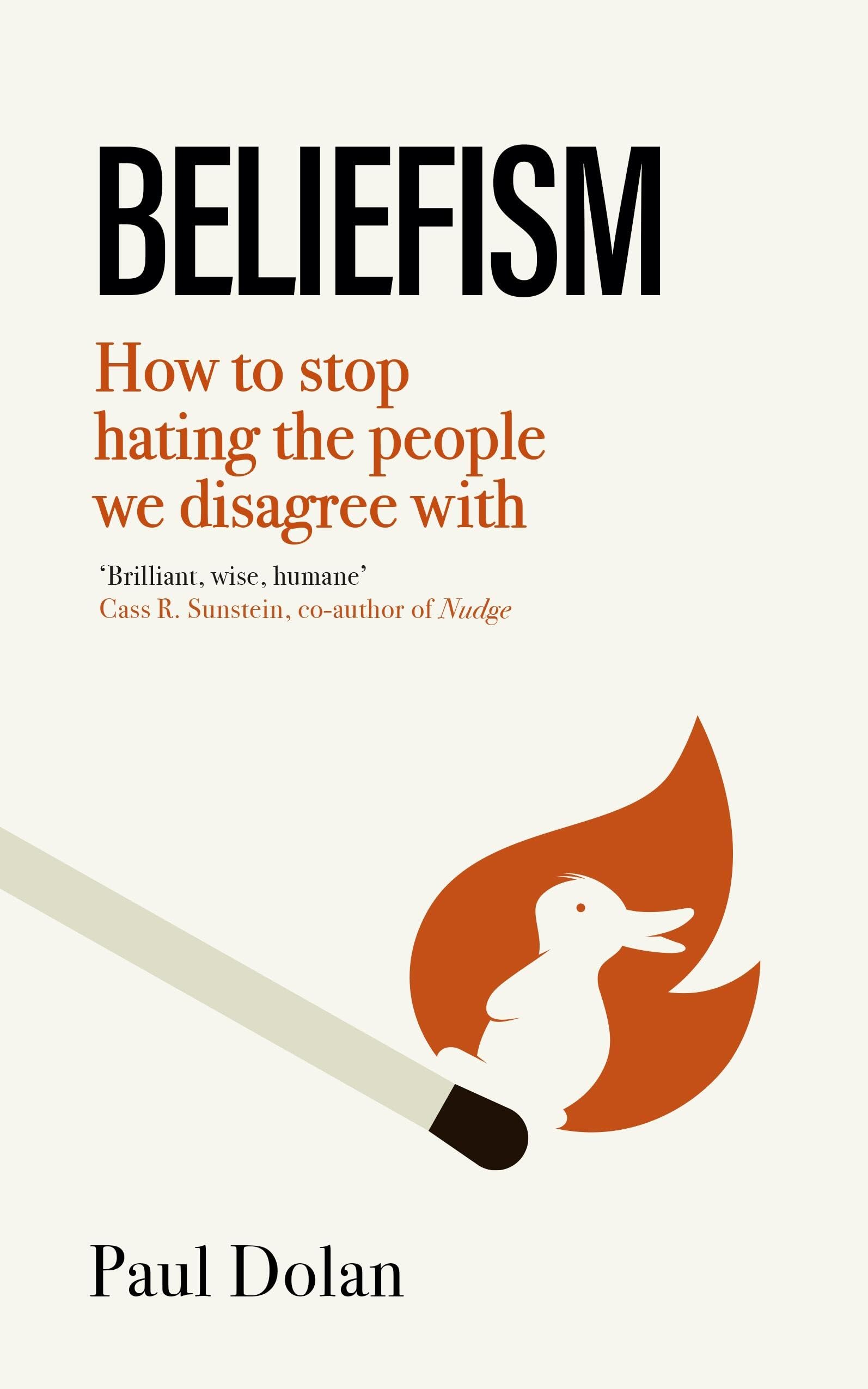
Dolan draws on his own research and that of others to explore which topics have the biggest divides and are most likely to trigger beliefist responses. You probably don’t need me to name any, but in the UK Brexit is a relatively new entry alongside political pot-boilers such as immigration or illegal drugs. There is evidence of increasing “partisan sorting” in friendship groups, dating, and where people choose to live, all reducing the sorts of interactions that erode prejudice. The world ends up divided between people who see a duck in the image on the book’s cover, and people who see a rabbit, and nobody can even begin to understand anyone who sees it differently.
Healthy societies need this kind of interaction however, and need a diversity of views. The lifeblood of democracy is debate, a back and forth exchange of ideas and a negotiation between them. And we’re also missing out on more diverse friendships, Dolan argues. Surely we ought to choose our friends on attributes like kindness, generosity or sense of humour, rather than which way they voted in a referendum or where they stand on veganism, gay marriage or Coldplay.
Dolan is open about his own views, and uses himself as an example throughout the book – as an academic from a working class background, he’s not easily pigeon-holed. Refreshingly, he insists that he’s not out to police opinion or change anyone’s mind about anything. Rather, his focus is on how we disagree without disdain.
This is an important distinction. Political polarisation is rooted in disagreement over policy. The hatred and hostility that seems so prevalent at the moment is separate: not about the disagreement per se, but an emotional reaction to it. This matters because it suggests that we can lower the temperature without forcing everyone to agree, and the book offers a variety of techniques for doing that, including humour, seeking common ground, and the simple practice of spending time with people with opposing views.
Beliefism doesn’t get into some of the other forces at work in our polarised world, and there’s no analysis of the media landscape or the way that rage is provoked for profit by the tech giants. It’s a short book to present a straightforward idea, and it’s very readable and at times very funny. Whether or not the word beliefism catches on, we’d all be better people if we were more alert to the way that we treat people with different opinions.

