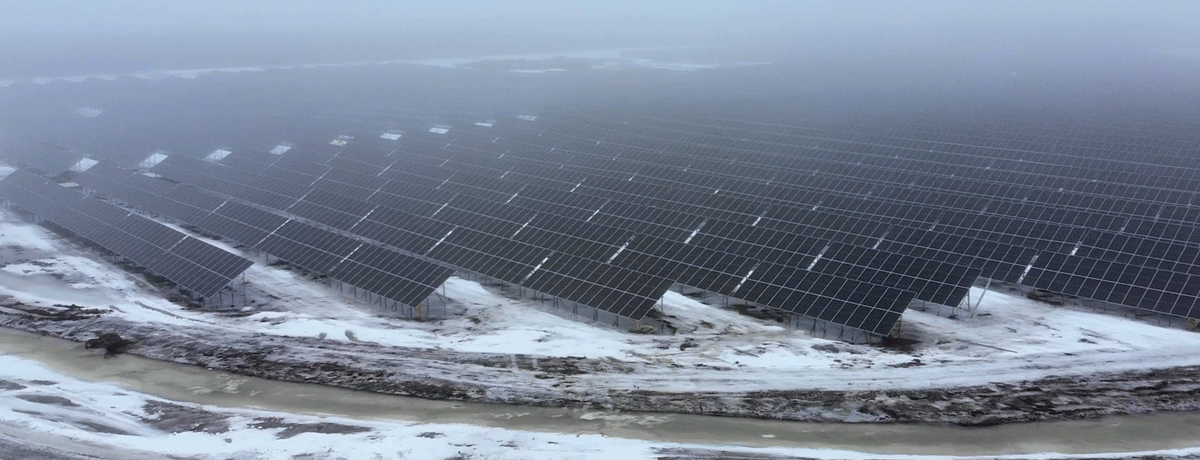
This week I read about a 70MW solar farm that has just opened in Lapland in Northern Finland. Not so long ago this would have sounded like madness. Even with the benefit of 22 hours of sunshine in the summer, solar power this far north would not have made sense. PV panels are now so cheap that they are being installed at grid scale a whisker from the Arctic circle.
Like plug-in solar, or the transformation happening in places like Pakistan, it’s further evidence of how solar is establishing itself as the power source of the future. The technology to tap into the free energy of the sun is available to a growing percentage of the world’s population. This cuts emissions from burning fossil fuels and reduces air pollution, but it also improves energy security, lowers energy costs, and rebalances political power. The huge lobbying might of the fossil fuel companies is eroding, and a new geopolitics of solar power is emerging.
This isn’t theoretical any more. It’s happening, and we are in the first chapters of a story that will run for decades to come. We don’t know how it will play out, but a solar economy will not be like the fossil fuel economy. The last 200 years have been based around clawing materials out of the ground and setting them on fire. Control over those resources has been crucial, and a major source of conflict. Scarcity or interruption to supplies can upend economies, topple governments and cause widespread misery and deprivation.
If the sun is the centre of the energy system – as it is already in non-human systems – this looks very different. What happens when energy is essentially free, inexhaustible, and beyond anyone’s control? What does it mean to have more than you could ever need? Where fossil fuels require a huge ongoing project of digging and grinding and burning, solar infrastructure essentially lies down in the sun. Stop and think about this, as the philosopher Oxana Timofeeva invites us to do in her book Solar Politics, and it raises some profound questions.
Imagine a solar economy where energy never runs out and is available to everyone for free. How relevant do terms like ‘consumerism’, ‘capitalism’ or ‘economic growth’ sound in such a context? I don’t ask this to imply some kind of solar utopia, just to point out that our basic understanding of the economy developed alongside the technologies that power it. Modern economic theory has been shaped by fossil fuelled industrialisation, and the widespread adoption of renewable energy will challenge some basic assumptions about what the economy is and how it works.
I look forward to seeing how the possibilities unspool over the rest of my lifetime. In the meantime, Bill McKibben is one of the most articulate commentators on our present moment, and the opportunities of a solar economy. It’s all explained in his recent book Here Comes the Sun, and if you haven’t seen it yet, here’s Bill McKibben’s TED talk from earlier this year:
 The Earthbound Report