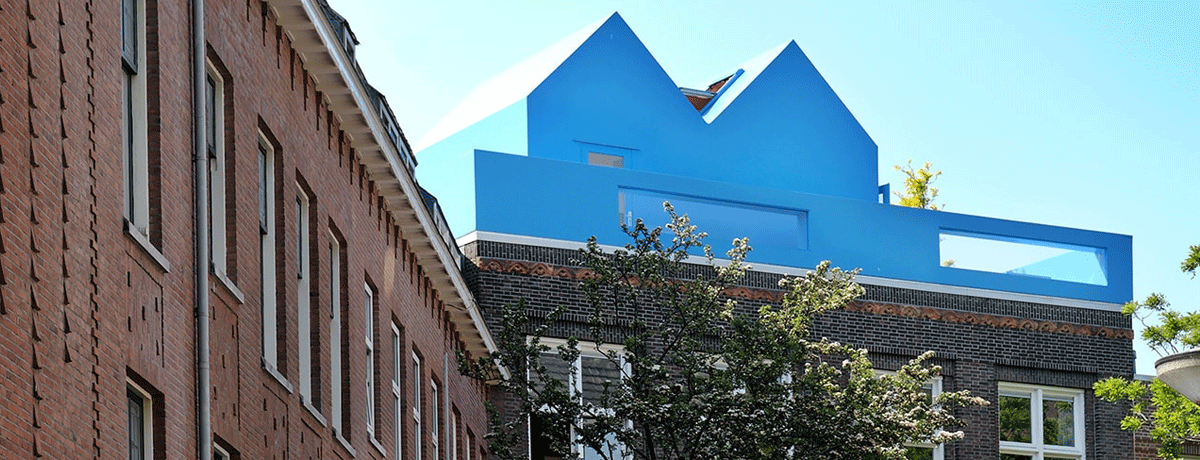
A couple of weeks ago I wrote about how white roofs could be a useful heat adaptation measure. In the comments, some people suggested that a green roof was a better idea, as it would enhance biodiversity as well as having a cooling effect. They’re not wrong, except that it’s much more expensive and not every roof is suitable, but talking of roofing colours reminded me of something.
The Dutch city of Rotterdam has the most ambitous plans to use its rooftops as a solution to urban growth – see this previous post. It’s already densely built up, but there’s a lot of space on top of buildings, and it’s prompted something of a movement to re-imagine what rooftops can do for a city. With lots of creative uses going on, it hosts regular rooftop open days to celebrate the idea.
They also use a variety of colour codes to classify different rooftop uses.
Green roofs, as just mentioned, would traditionally be planted up with sedum or a similar low-growing and low-maintenance plant. They cool the building and the surroundings, helping to reduce the urban heat island effect and reduce air pollution. If we take it as a broader category, green roofs can include gardens, allotments and parks.
Blue roofs might include planted elements, but the distinguishing feature is that they are designed specifically for rainwater catchment. They catch rainwater and slow its descent into drains, which prevents flooding in a heavy downpour. They’re an important tool in creating climate-resilient sponge cities.
The most common secondary use of a rooftop is a Yellow roof, and I’ve got one myself. These are the roofs used for energy generation, usually solar. You can double up and create a biosolar rooftop if you’re so inclined, nestling your solar panels among the plants like this company in Milton Keynes does.
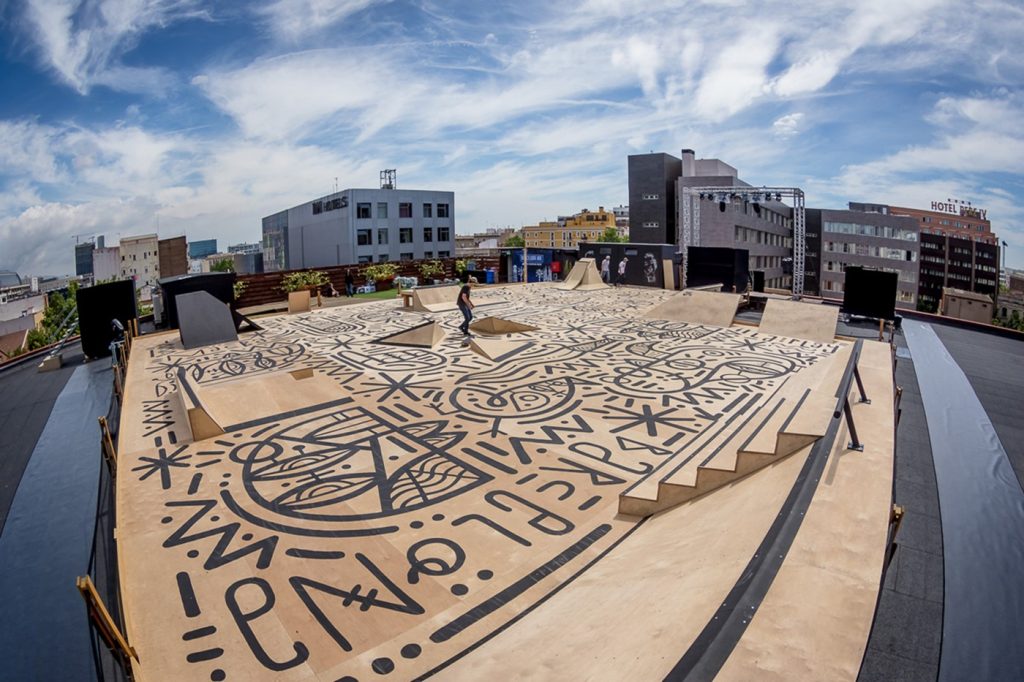
Some of my favourite alternative rooftops are Red roofs, which are used for social functions, such as this skatepark in Barcelona. London has a nice example at the Queen Elizabeth Hall on the South Bank, which has a cafe in a rooftop garden. Some red roofs are public spaces, but they don’t have to be open to everyone. I’ve been visiting schools in Hackney recently, and one of them had a rooftop playground. Not far down the road in Shoreditch, there are two famous retired tube carriages craned onto the top of an old warehouse to create co-working spaces and now a bar.
Orange roofs are transport related. At the expensive end, that might be a helicopter landing pad at a hospital. More ordinary uses might be connected pathways that allow people to cross the city above the traffic. Several American cities have elevated path networks in one form or another, often crossing or incorporating rooftops. China’s Chongqing, the ‘mountain city’, is built on such steep terrain that the roof of one building might provide the ground floor entrance for the one above it.
Rarer, the team in Rotterdam use Purple roofs for residential, and they have a nice example in the form of Didden Village. It’s a cluster of tiny homes on a rooftop, arranged to create shared communal spaces. Casa parásito, the ‘parasite house’ is an award winning project from Chile, responding to the lack of land for affordable housing in Quito. There are practical reasons why living on the roof has never quite caught on, but it has a certain romance and keeps coming back as an idea.
Finally, and the least glamorous of them all, is the Grey roof, which is a roof that hosts technical infrastructure. Vents, air conditioning and air handling units, etc.
While green and blue are commonly used, this isn’t a lexicon that is likely to become standard, but it’s interesting to see how Rotterdam’s ambitions have created the need for this kind of classification. They also talk about ‘golden combinations’, because there’s no reason to limit a good rooftop space to one use.
If you’d like to bring some rooftop vibrancy to your city, Rotterdam has some digital planning tools for assessing and suggesting alternative uses.

