
Climate disaster can be averted with current technologies and solutions. That’s an important message. We don’t need to hang our hopes on nuclear fusion, solar panels in space, or geoengineering. Preventing runaway climate change is within our power, starting with a full transition to clean energy and a circular economy.
However, not everything can be solved through this kind of transition. There are some hold-out areas of human activity that don’t have a go-to environmentally friendly option. I’ve written about most of them in the past, but Drawdown helpfully summarised them recently and I’m not sure I’ve seen them all in one place in this way before.
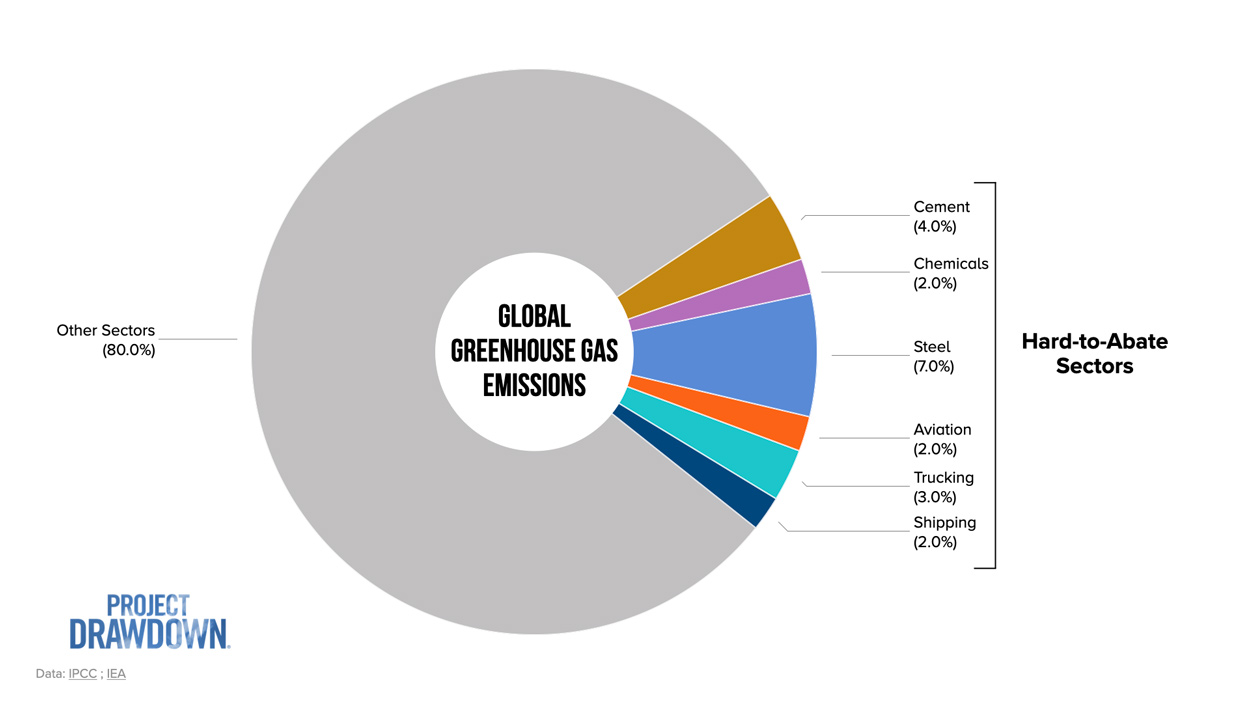
These problem sources of greenhouse gas emissions include aviation and shipping, steel and cement production. Together they account for around 20% of the total.
Some sectors have an overarching solution. Take low carbon heating. There are a variety of technologies we could use to do it, but overall it boils down to electrifying everything and running it on renewable energy. These trickier sectors don’t have a simple story, and depend on incremental change and a variety of different strategies. Shipping, for instance, could involve slower sailing speeds, biofuels, hybrid wind power or nuclear powered ships.
In other cases the solutions exist but are expensive. Steel is in that position. There are steel plants that use hydrogen and could be considered low carbon, but their production costs are much higher. So far they’re only going to serve customers prepared to pay a premium for sustainable steel. Those costs will come down, but progress is slow.
For other sectors there may no good solution. Aviation seems to be in that category. It’s hard to justify biofuels if they compete with food production, and I’m not sure where they would come from at scale otherwise. The jury is very much out on hydrogen, and electric planes are limited in what they can do. The weight of batteries makes electric long haul flights impossible at present. There may be innovative solutions in the long term. In the short term the only way to cut emissions is to reduce demand, which is why I advocate for fewer flights – a view that makes me unpopular in an airport town.
While we can choose to fly less, we can’t eliminate it altogehter. Neither can the world do entirely without steel, cement and chemicals. Even with a reduction in demand, using all the alternatives we can think of and recycling where possible, there are still going to be emissions from those industries. That’s why I’m less cynical than some about carbon capture and storage for these specific industries.
It’s also why we need the net in net zero. Carbon offsetting should be reserved for these sectors, in addition to reducing emissions where we can. We can’t get to absolute zero, but restoring nature and improving the earth’s capacity to absorb greenhouse gases gives us wriggle room for the things we can’t fix.
More from Drawdown here, and let me know if you come across good stories from these sectors.


Here’s to being unpopular in an airport town! ; )