
A striking climate change conundrum has emerged in Namibia, where drought threatens the survival of 200 elephants. The government’s solution? Sell the elephants.
My wife, who is a BBC radio journalist, recorded a special programme on ‘earth heroes’ in our local area. It features activists, inventors, entrepreneurs and more, and you can listen back here.
People have been talking about geothermal power from Cornwall for decades and the potential has never been properly tapped, so it’s great to hear that the first commercial contract has been signed to supply it. (It’s with Ecotricity, once again with another UK first.) It’s only for 3MW of power at the moment – but you’ve got to start somewhere.
Good to read about an amendment to the Basel Convention on waste trading, that will hopefully give developing countries more ways to prevent plastic dumping by overdeveloped nations.
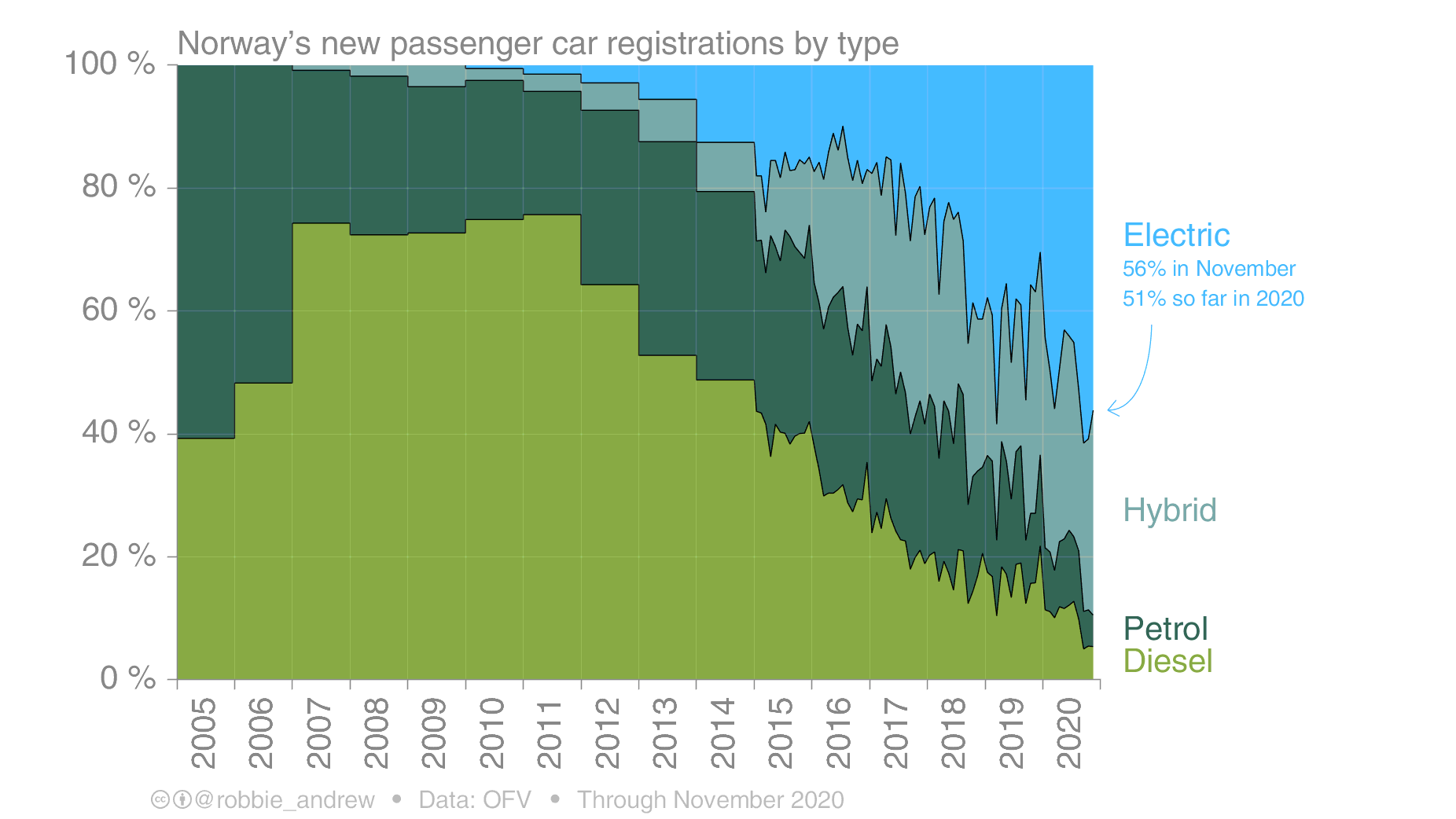
This graph of new car sales in Norway, posted by Robbie Andrew on Twitter, shows how pure petrol or diesel cars are now very much a minority interest. This is a dramatic shift in a decade, and the kind of thing I would hope to see in Britain in the coming years – alongside an overall decline in car sales and increased public and active transport, naturally.
Three of this week’s posts, in case you missed them:

The science of hope
The Living Planet Report is produced every two years by WWF and the Zoological Society of London, serving as a regular health-check on wild nature. It’s not been positive news, and over the years its headline finding has become increasingly well known: that since 1970, average wildlife populations have declined by 73%. (This is frequently…
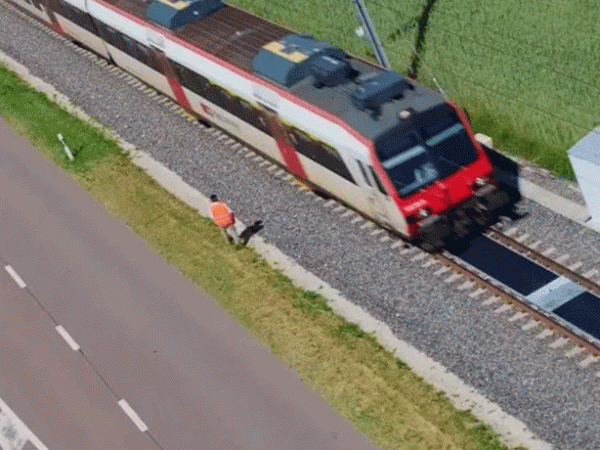
Should we put solar panels on railway lines?
A few years ago there was a flurry of internet hype about solar roadways – imagine a world where roads generated power for the streetlights! Or where solar-powered LEDs along the road replaced the white painted lines for no good reason! A lot of money was spent on this across various projects, the biggest being…
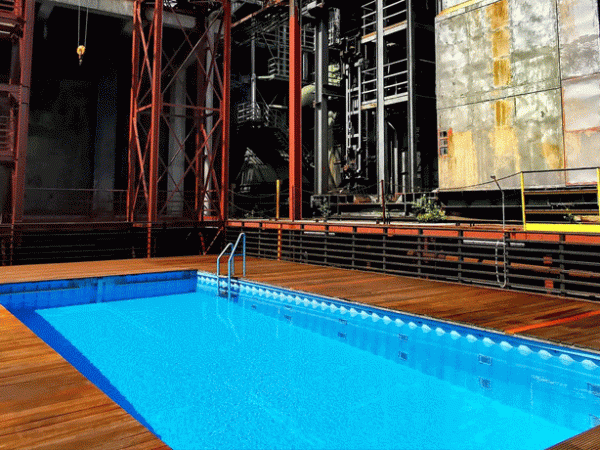
Book review: Don’t Build, Rebuild, by Aaron Betsky
“We should not construct new buildings from scratch,” says the first line of Aaron Betsky’s Don’t Build, Rebuild. He’s an experienced architecture critic from the Netherlands who has spent his career travelling the world and studying buildings. The ones he is drawn to today represent an architecture that “does not impose itself on the land…


Very interesting, well done.