
The climate camp was an early and influential series of actions from the climate movement in the UK, before dissolving in 2011. It was back this week in a slightly different form, with Climate Camp Scotland taking up residence at Grangemouth.
“Capitalism won’t deliver the energy transition fast enough” writes Ed Brower in his final newsletter as US energy editor of the Financial Times. When I say this kind of thing I get called a communist, but even the FT knows it really.
After a shift in working and travel patterns during the pandemic, there are now more bikes on the roads in the City of London than private cars.
Will the US pay climate reparations to the countries most affected by climate change? “No, under no circumstances,” says John Kerry.
I hear quite a lot of grumbling about the mining needs for electric car batteries and materials for solar panels. But according to one calculation, our current fossil fuelled economy requires 535 times more mining extraction than the clean economy will in 2040.
Highlights from this week

Book review: Street, Palace, Square, by Jan-Werner Müller
Human lives, both individually and collectively, unfold in a built environment. Generally speaking we don’t get to shape that environment all that much. Most of us don’t get to design our own homes, let alone streets and public spaces. Unless you have a particular interest in architecture or urban design, you might never really think…

What we learned this week
I came across the Missing Lynx Project this week, which is campaigning for the reintroduction of the Lynx to Northumberland and the Scottish borders and is worth commending for the name alone. Carbon in Context is a new comparison tool from Project Drawdown. Tonnes of gas is an unintuitive way of measuring anything, so stick…
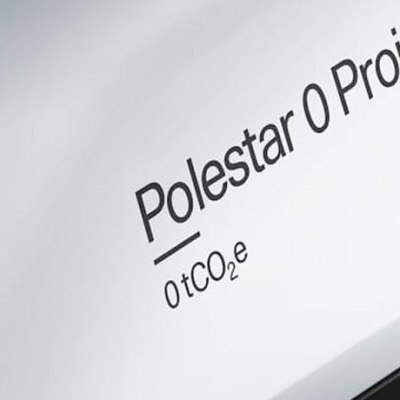
Polestar’s progress on a zero carbon car
In 2022 I wrote about how Swedish EV brand Polestar had committed to creating a zero carbon car. Note that this isn’t a ‘net zero’ car, but a truly zero carbon process from start to finish. It was industry-leading in its ambition, and also the kind of thing that some companies make a big noise…
- Do we need robots with lasers to feed the world?
- The climate possibilities of hemp
- Book review: End Times, by Peter Turchin
Recommendations
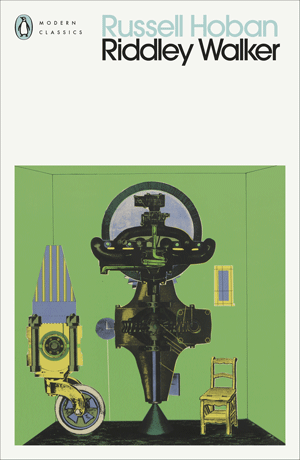
I took the opportunity of a long train journey recently to try a sci-fi dystopia I’ve been recommended a couple of times, Russell Hoban’s Riddley Walker. It’s something of a forgotten classic, though apparently well received on publication in 1980. It tells the story of Riddley Walker, a young man exiled from his community in a world a thousand years after a cataclysmic disaster that has caused society to revert to iron age levels of progress.
Two things really stand out. One is the language, as it’s narrated in a clumsy and crude first-person style. Hoban imagines that English itself has devolved and literacy is rare, and the writing is an imaginative and often hilarious mangling of language. (The boss of the region is called the Pry Mincer, and there’s a ceremonial figure called the Ardship of Cambry.)
The second thing is the way that our current way of life has become a distorted and quasi-religious mythology that is passed down through storytelling. Humans unlocked ‘the clevverness’ and they had planes, and TV, and computers. “They had machines et numbers up,” Riddley Walker explains as best he can. “They fed them numbers and they fractiont out the power of things. They had the numbers of the rain bow and the power of the air all workit out with counting which is how they got boats in the air and picters on the wind. Counting clevverness is what it wer.”
The book gives us a way of looking back at ourselves from the wrong side of the future, highlighting how extraordinary progress has been – “every thing good and every body happy and teckernogical progers moving every thing frontways farther and farther all the time” – and how spectacularly stupid it would be to throw it away in the pursuit of more.
 The Earthbound Report
If I cannot afford two things and one is 100 times less expensive it makes no consolation that one is cheaper Jeremy.